Customers ask us this one straight, so we will answer it straight. Does professional upholstery cleaning help with allergies? For most allergy-prone households, yes, with an honest boundary around what "help" means.
Here is the plain version. Your sofa, your armchairs, your draperies, and your mattress are soft, and soft surfaces hold onto things. Dust, dust mites, pet dander, pollen tracked in on shoes and clothes. Cleaning removes much of that trapped load. It does not cure anything, and we are careful never to pretend it does.
What your fabric furniture is holding
Every fabric surface in your home works a little like a catch-all. Air moves through the room, particles settle, and the weave and padding hold them. Over months you build up a quiet layer of dust, dander, pollen, body oils, and crumbs down where you cannot see it.
That is the part that surprises people. The cushion looks fine on top. The load is underneath, in the fibers and the foam, and a household vacuum only skims the surface of it. Your mattress does the same thing on a bigger scale, which is what we get into here.
Why sitting down is the problem
A settled particle is not doing much. The trouble starts when it gets airborne again.
Every time you drop onto the couch, a puff of air pushes up out of the cushion, and whatever was resting in there comes with it. Same with plopping down on the bed or brushing past the draperies. That is the moment an allergy-prone person tends to notice, the sneeze that always seems to start at the sofa. The stuff was already there. Sitting down just put it back in the air you breathe.
What extraction actually removes
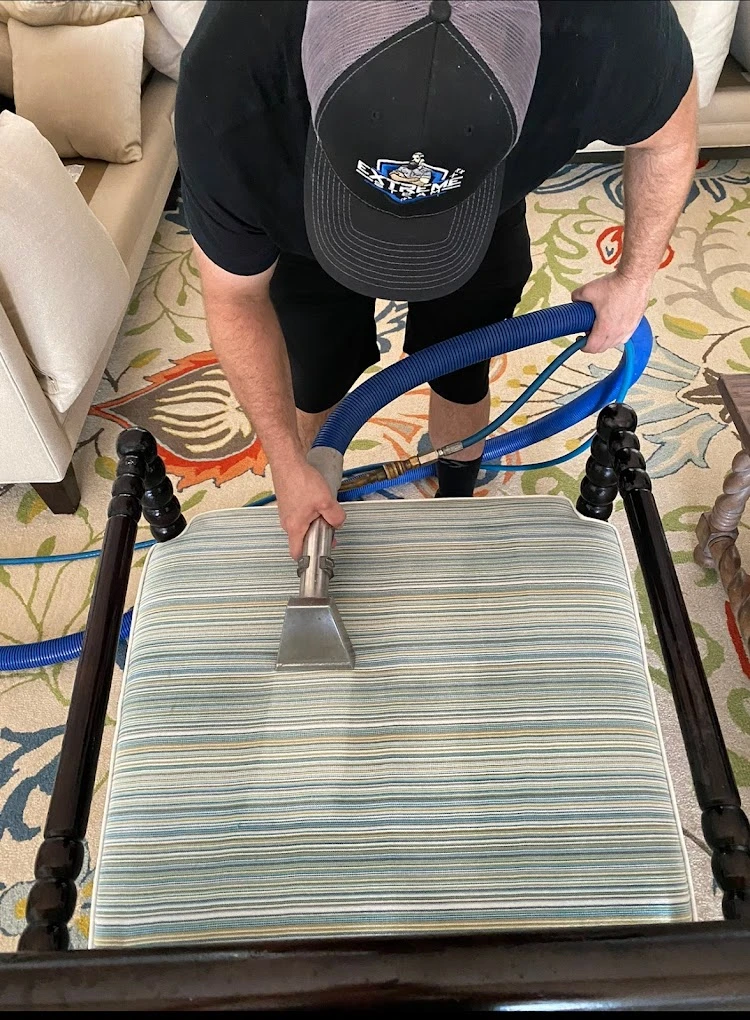
We use hot water extraction, what most people call steam cleaning. Hot water and cleaning solution go into the fabric under pressure, break the trapped material loose, and a strong vacuum pulls it back out into our machine. The dust and dander leave your house in our tank instead of resettling.
That physical removal is the honest reason cleaning helps with allergies. We are pulling a real load of dust mites, dander, and pollen out of surfaces you sit and sleep on. Many allergy-prone households tell us they notice the difference, and less of that sofa-and-bed sneezing is the shape it usually takes. Everyone's allergies are their own, so we promise the removal, and let the results speak for the rest.
We keep the claim honest: a large share of what was trapped is now out of the house, and for most households that is exactly the difference they feel.
Why South Florida makes it worse
Humidity is the local wrinkle. Down here in Broward and Miami-Dade, soft surfaces stay a little damp for most of the year, and damp fabric is a friendlier home for dust mites and odors than dry fabric is. A sofa in Pembroke Pines holds its load differently than the same sofa would in a dry climate.
That is why the buildup comes back faster here, and why we tell allergy households in Weston, Miramar, and Davie to lean toward cleaning twice a year rather than once. The humidity earns that extra visit. We would tell you if it did not.
Do the bedroom and the living room together
If allergies are the reason you are booking, think about where you spend your hours. You breathe closest to soft surfaces in two rooms: the couch where you unwind and the bed where you sleep a third of your life.
A few things worth pairing on the same visit:
- Mattress and upholstery together. The bedroom is the highest-contact soft surface you own, so cleaning the mattress alongside the living room furniture covers the two spots that matter most for allergies.
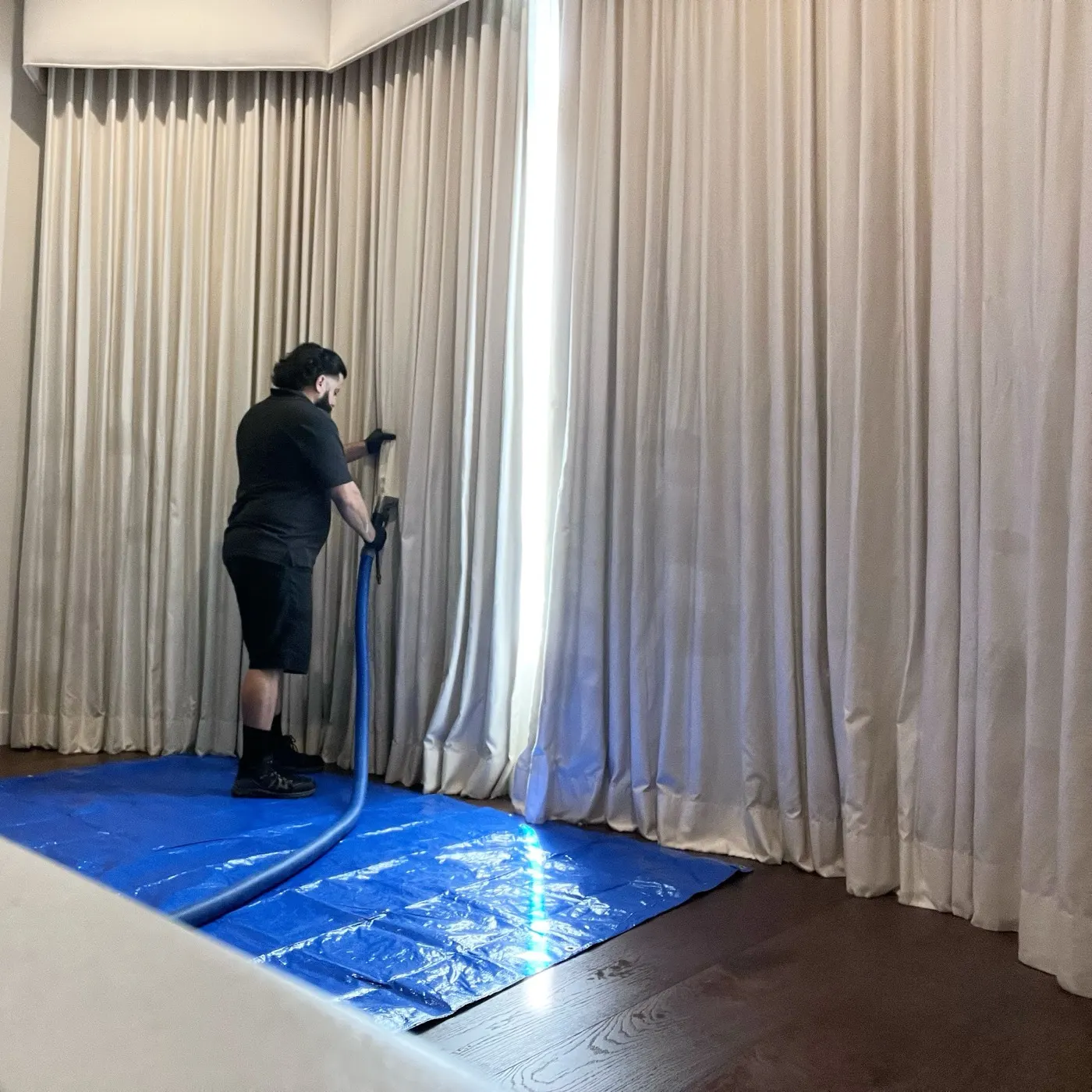
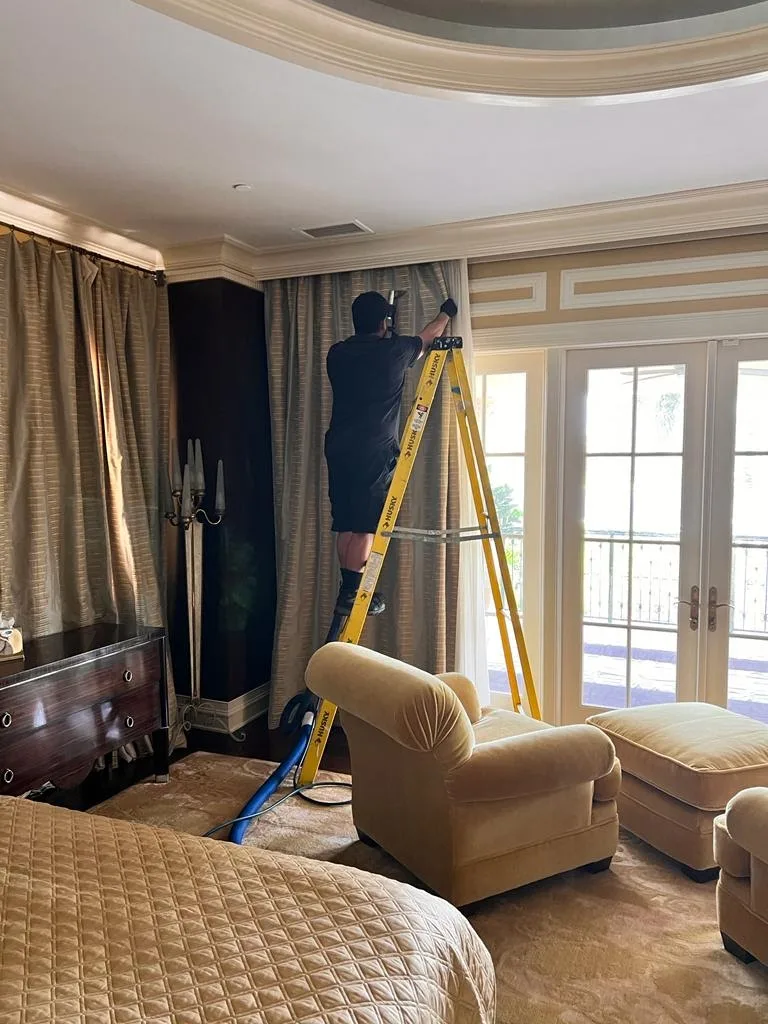
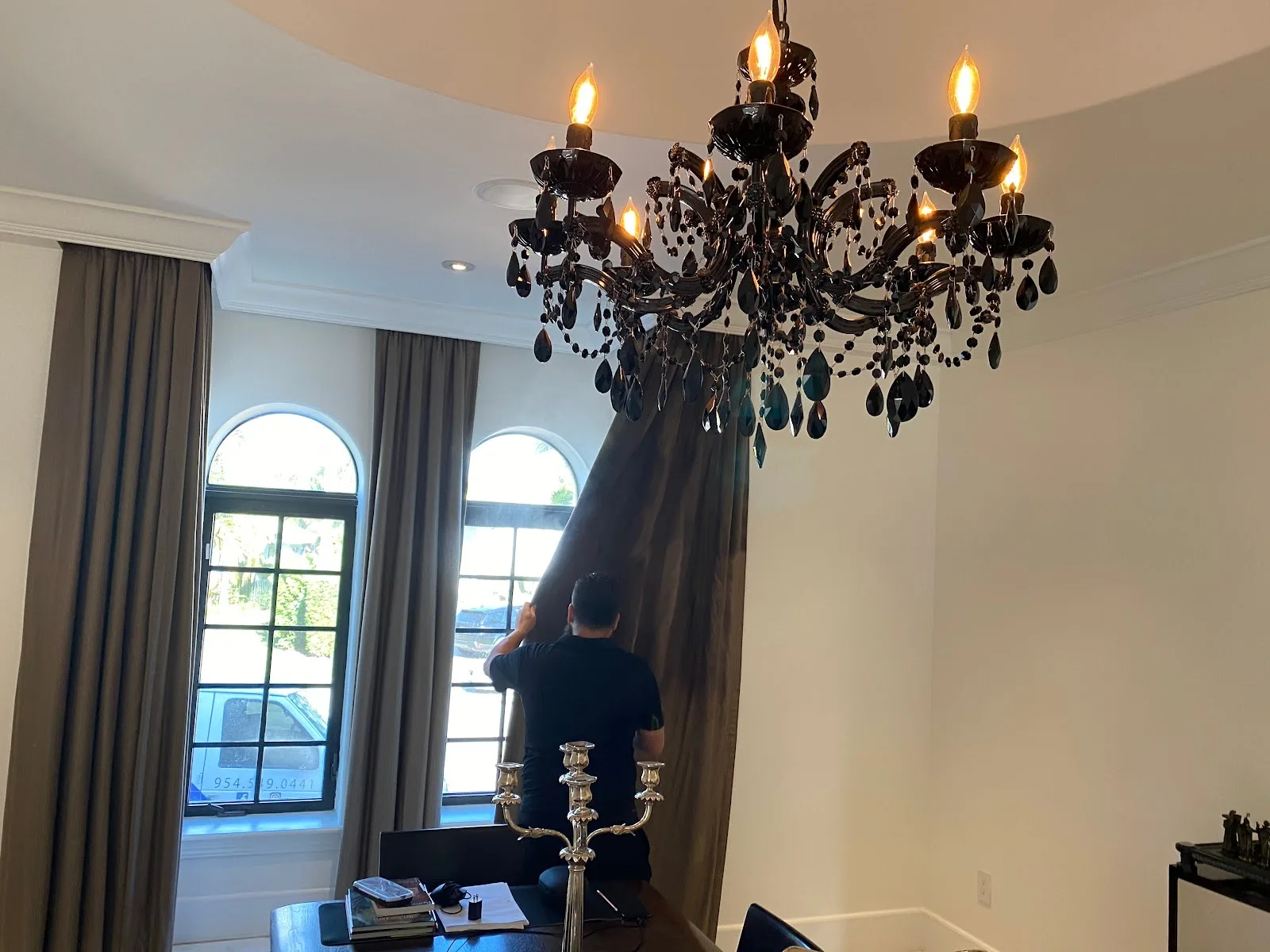
- Draperies, if they are heavy. Thick curtains catch a lot of airborne dust and pollen and rarely get cleaned. They are worth including when allergies are the concern.
- Twice a year in an allergy home. In our humidity, that cadence keeps the trapped load from rebuilding between visits.
One honest note to close on. Cleaning works alongside whatever your allergist has you doing, never instead of it. We handle the furniture. Medical advice is their department, and we will always say so.
Get a free quote
If someone in your house sneezes the moment they hit the couch, cleaning the fabric is a sensible place to start. Reach out for a free estimate, and tell us whether allergies are the reason you are calling. We will walk your furniture, clean a sample area on arrival so you see the result before we commit to the full job, and give you our honest read on what a clean will and will not do for you.
Frequently asked questions
Does professional upholstery cleaning help with allergies?
For most allergy-prone households, yes, in the sense that it removes much of the dust, dust mites, pet dander, and pollen trapped in the fabric. Fewer of those settled in your sofa means fewer of them getting stirred back into the air when you sit down. It helps alongside whatever your allergist recommends, never as a replacement for it.
What is actually trapped in my sofa and chairs?
Everyday household stuff that fabric holds onto, meaning dust, dust mites, pet dander, pollen tracked in from outside, plus body oils and crumbs. Most of it is invisible and sits deep in the weave and padding where vacuuming does not reach.
Should I clean my mattress and upholstery at the same time?
If allergies are the reason you are cleaning, pairing them makes sense. The bedroom is where you spend the most hours breathing close to a soft surface, so a mattress clean and an upholstery clean together cover the two places that matter most.
How often should upholstery be cleaned in an allergy household?
Once or twice a year is a reasonable baseline for most homes, and homes with pets or heavy use lean toward the higher end. If someone in the house has allergies, staying closer to twice a year keeps the trapped load from building back up.
Will cleaning make my furniture wet for days?
No. We use hot water extraction and pull most of the moisture right back out, so your furniture is usable the same day and dries fully within a few hours in most homes.