If your sneezing seems to start near a window, take a look at what is hanging beside it. People chase allergy triggers around the house and land on the carpet, the sofa, the mattress, the air vents. The curtain panels rarely make that list, even though they have been catching whatever comes through that window for years.
Here is the honest boundary before anything else. Cleaning drapery removes the load the fabric has collected, and that is where it stops. None of this cures an allergy, and we would rather say so up front than let you assume something bigger.
Drapery fabric behaves like a filter
Air moves past your curtains all day. Every time the room breathes, whether from an open window, the air conditioning cycling on, or people walking through, the fabric is standing right there in the path of it.
The weave does what any woven material does in moving air. It holds on. Dust, pollen tracked in from outside, pet dander that drifts off the furniture and settles wherever it lands. A panel that has hung in the same spot for three or four years is carrying a real amount of it, packed down into the fibers where you cannot see a thing.
That is the strange part about curtains. They can look completely fine from across the room and still be loaded.
Opening the curtains puts it back in the air
Settled dust sits quietly until something moves it, and a curtain is a piece of fabric people move on purpose.
You pull the panels open in the morning. You draw them closed at night. You brush past them on the way to the patio door, and somebody bumps the edge every time they lean over to check the weather. Each of those flexes the fabric and releases a portion of what was resting inside it, right at head height, right where you are standing.
If someone in the house has allergies, that is often the moment they notice. The sneeze that shows up at the window instead of the couch. The material was already there. Moving the panel just handed it back to the air in the room.
Fabric furniture does the same thing when you sit down, which we walked through in our piece on upholstery and allergies. Curtains work the same way, standing up.
The surface everyone forgets
Carpet gets vacuumed because people walk on it. Sofas get cleaned because people sit on them and spill things. Nobody touches a curtain in a way that leaves a visible mark, so it never earns its turn on the cleaning list.
We hear the same thing on a lot of jobs. The homeowner cannot remember the last time the drapes were cleaned, and in plenty of houses the honest answer is never. Meanwhile those panels have been quietly filtering the room for the better part of a decade.
Running a vacuum attachment down the front helps with what is loose on the surface. The load that has worked its way into the weave needs something that reaches into the fibers.
Cleaning them where they hang
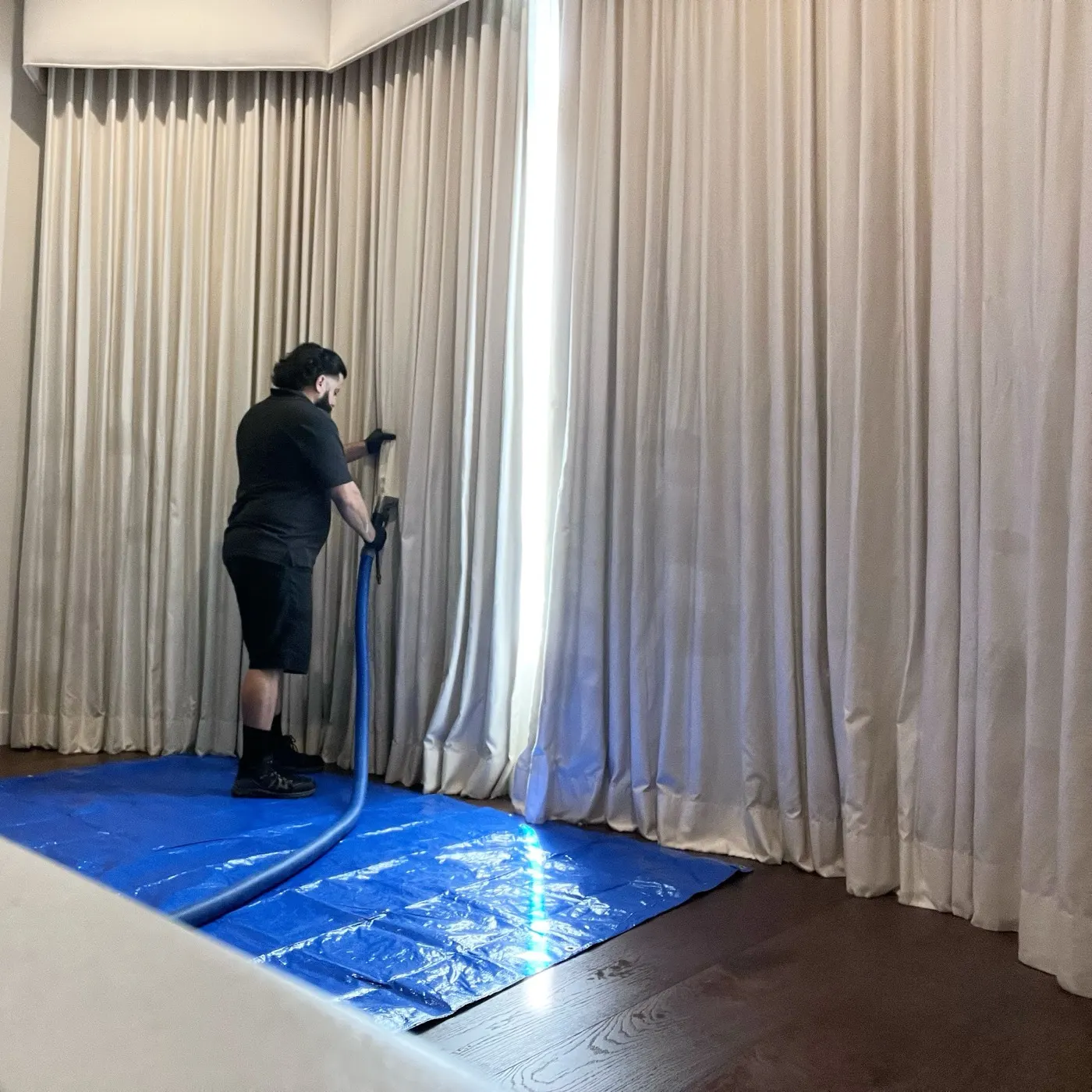
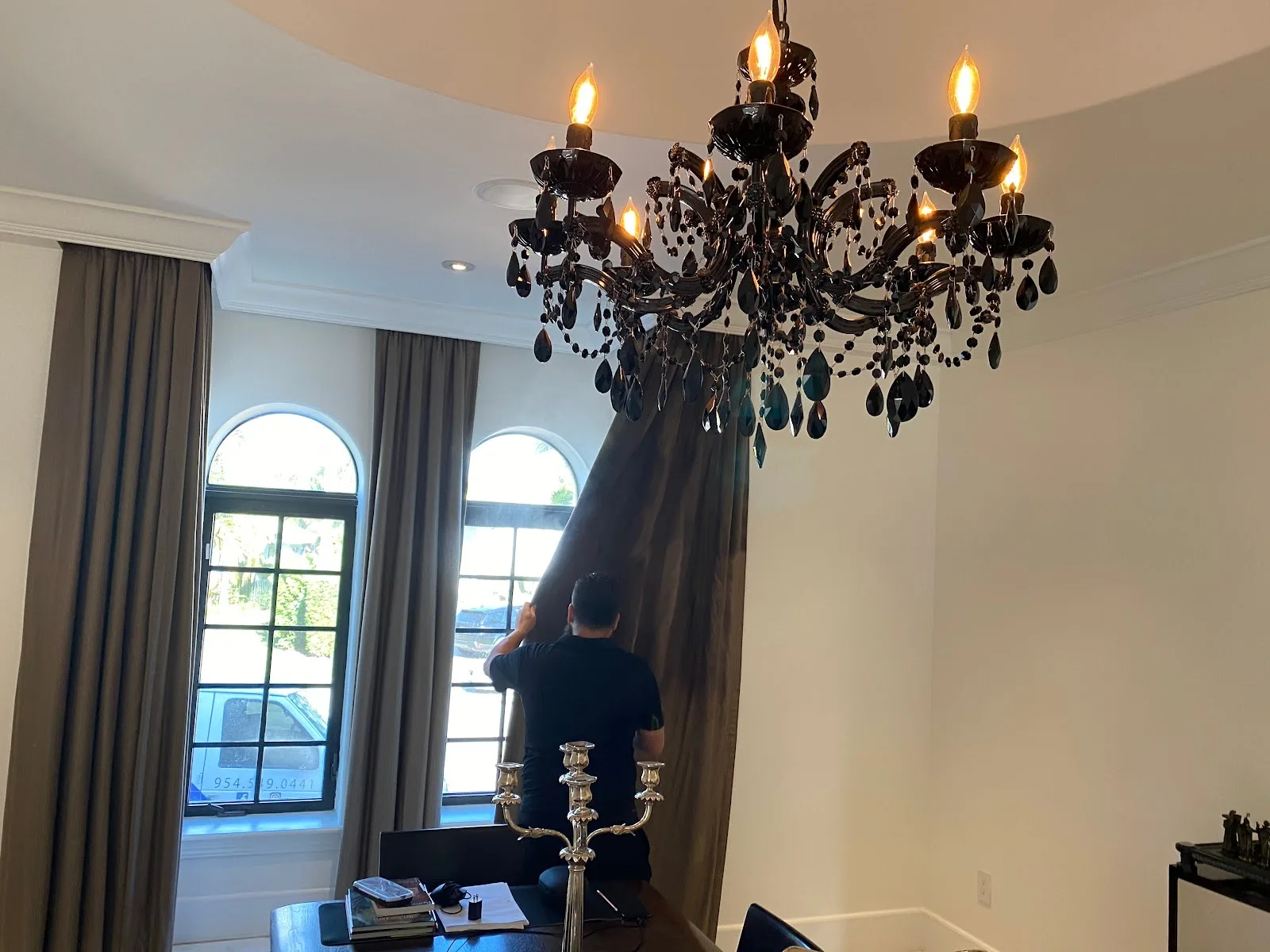
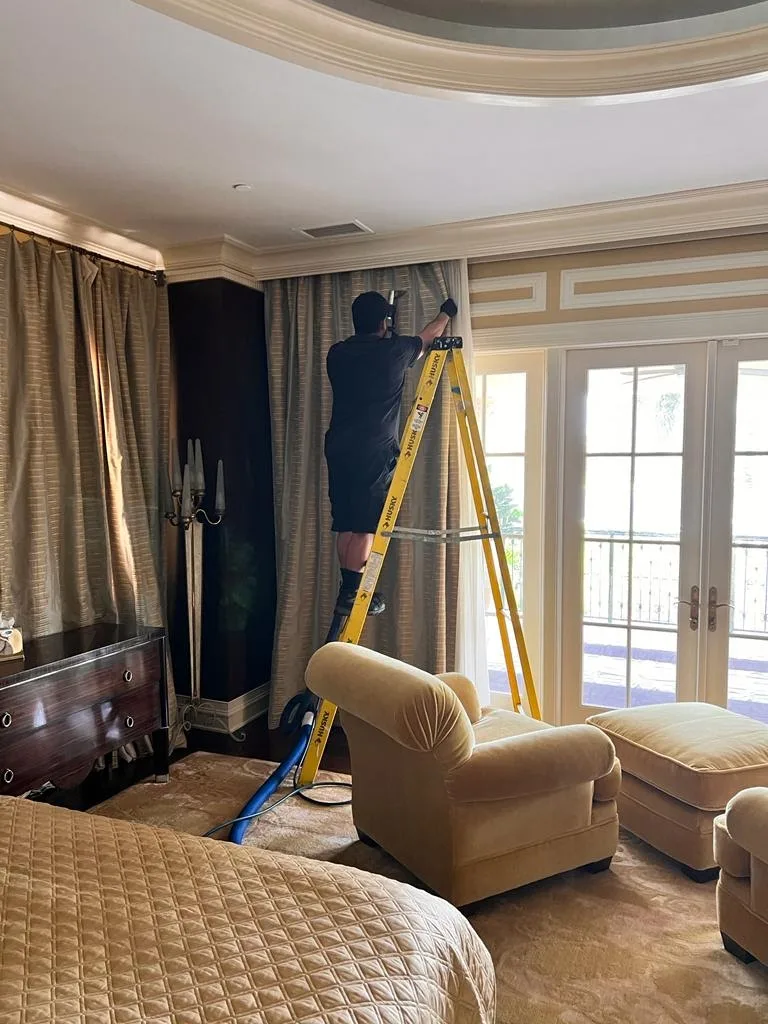
We steam clean drapes in place, still on the rod. The panels stay right where they are, your windows stay covered the whole time, and there is nothing to haul off and rehang later.
The job runs in a set order. We check the fabric and test a small hidden spot first so we know how it handles steam. Then we vacuum the loose dust off both sides of the panel so the steam is working on what is embedded rather than what is sitting on top. After that each panel gets cleaned top to bottom while it hangs, which lets it keep its shape and its folds.
What comes out of the fabric leaves in our equipment instead of resettling somewhere else in the room. That physical removal is the whole reason this matters for a dust-sensitive household. You can read the full breakdown on our drapery cleaning page.
How often is often enough
Once a year keeps most drapes looking and smelling fresh. If somebody in the house has allergies, or you have pets, or you live on a busy road where dust never stops arriving, every six months is the better cadence. Curtains hanging anywhere near a kitchen are their own case, since cooking grease settles into the fabric and grabs dust faster than a bedroom panel ever will.
We clean drapery for homes and for businesses across Broward, Miami-Dade, and Palm Beach, so offices, restaurants, and lobbies run on the same logic. More foot traffic and more air moving through means the fabric fills up sooner.
One last note. Cleaning your curtains is housekeeping, and it works alongside whatever your allergist has you doing. We handle the fabric. Medical advice stays with them, and we will always say so.
Get a free quote
If the sneezing in your house seems to live near the windows, the curtains are worth checking before you keep guessing. Reach out for a free estimate and tell us how many panels you have and roughly how long it has been. Pricing depends on the fabric and the size of the job, so we will look at what you actually have and give you a straight number for it.
Frequently asked questions
Can dusty curtains make allergies worse?
They can add to what is already floating around a room. Drapery fabric holds dust, pollen, and pet dander in the weave, and moving the panel sends some of it back into the air you breathe. Cleaning removes that trapped load. It does not treat allergies, and anything medical belongs to your doctor.
Why do I sneeze more when I am near the window?
The window is where outside air, pollen, and street dust come in, and the curtain hanging there catches a good share of it. If your symptoms pick up when you open or close the panel, the fabric is a reasonable place to look.
Do the curtains have to come down to be cleaned?
No. We steam clean drapes in place while they are still hanging, so the panels stay on the rod and your windows stay covered. There is nothing to take down, bag up, or rehang afterward.
How often should curtains be cleaned in a house with allergies?
Once a year keeps most drapes fresh. Homes with allergies, pets, or heavy dust do better on a six month cycle, and curtains near a kitchen tend to need attention sooner because they pick up cooking grease along with the dust.
Is vacuuming my curtains enough?
Vacuuming helps with the loose dust sitting on the surface, and we do it on both sides of the fabric before we steam. What is worked down into the weave stays put until something pulls it out, which is the part steam cleaning handles.