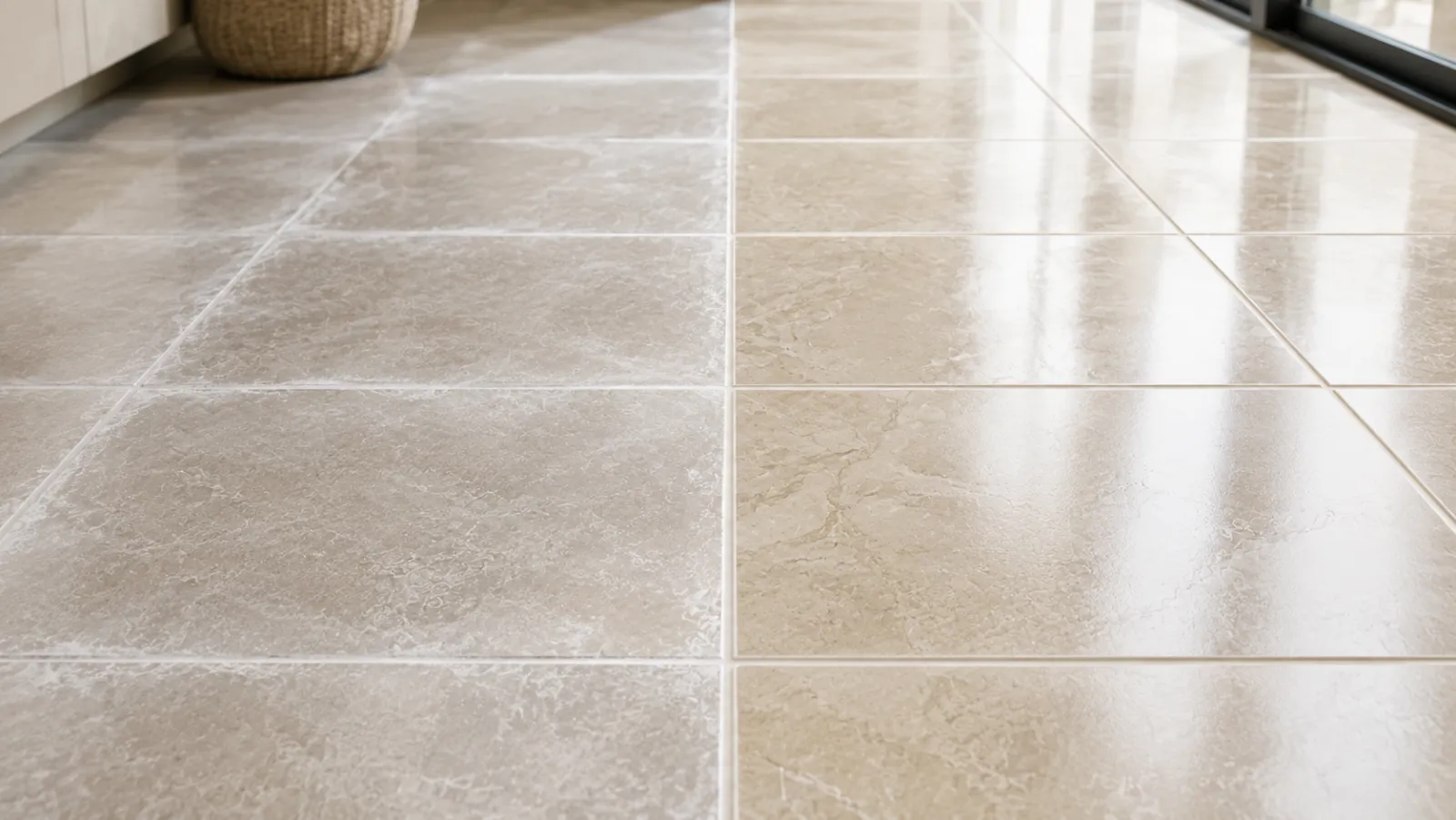
You waited weeks for the tile. The installer finished, the floor dried, and now you are standing there looking at a surface that seems cloudy and flat instead of the clean tile you picked out. Your first thought is that something went wrong.
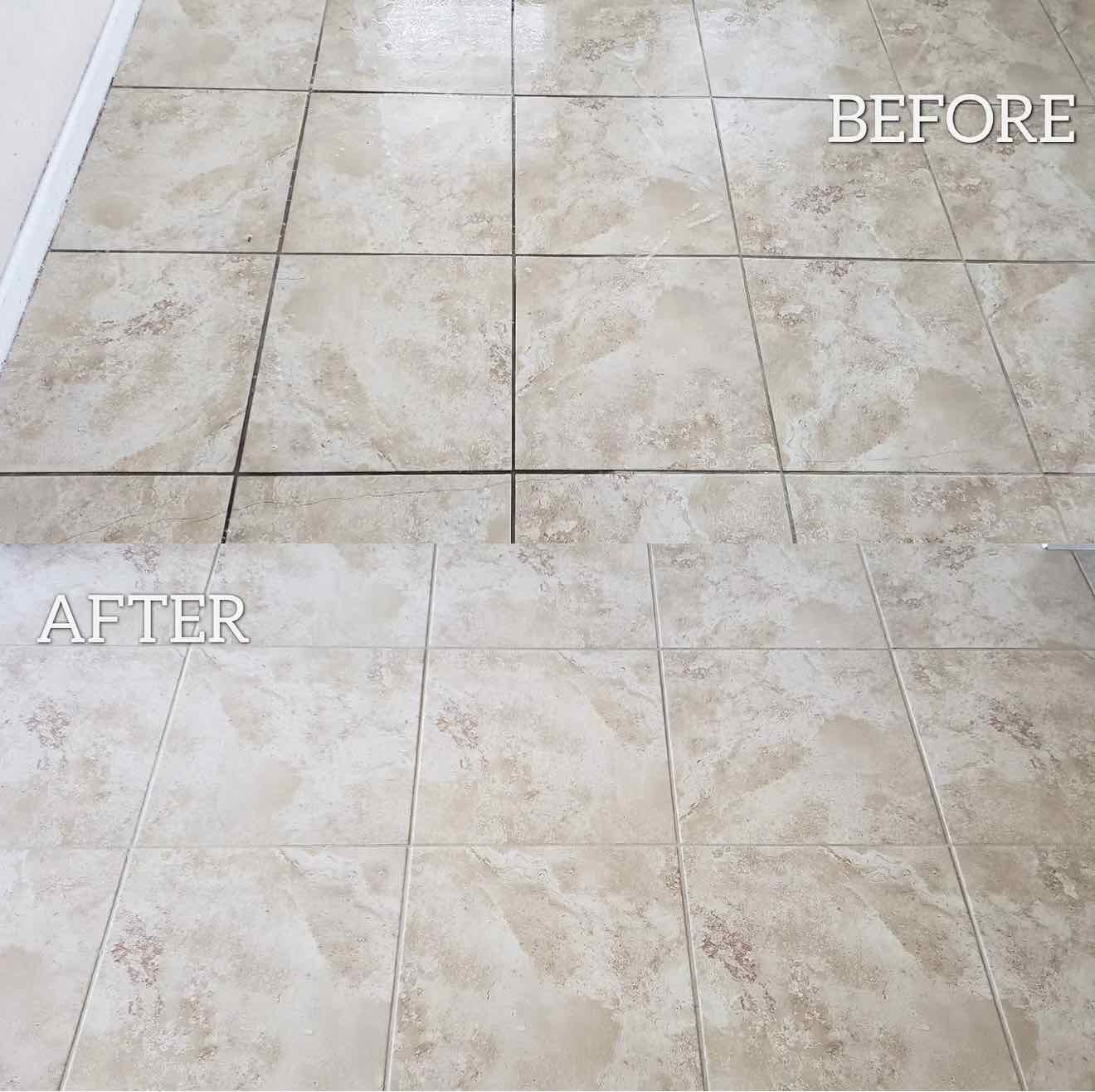
Nothing went wrong. What you are looking at is grout haze, and almost every new tile floor has it.
What grout haze actually is
When tile gets set, grout gets worked into the lines between the pieces, and a thin layer of that grout washes across the face of the tile in the process. As it dries it leaves a fine mineral film on the surface. That film is grout haze.
It is completely normal, and it is part of how tile goes in. The catch is that you often cannot see it while the floor is still damp. Everything looks fine on installation day. Then the floor dries, the light comes across it at an angle, and suddenly the whole surface looks dull and a little foggy. The haze was there the whole time. It just became visible once the moisture left.
Why mopping only makes it worse
The natural reaction is to grab a mop and clean it off. That is where people lose a weekend.
Grout haze is a mineral residue bonded to the tile face, so plain water and a mop do not dissolve it. What the mop actually does is wet the film, loosen a little of it, and drag it in swirls across the rest of the floor. You end up moving the haze around rather than removing it, and the streaks left behind can look worse than what you started with. Store-bought floor cleaners tend to leave their own residue on top of the problem.
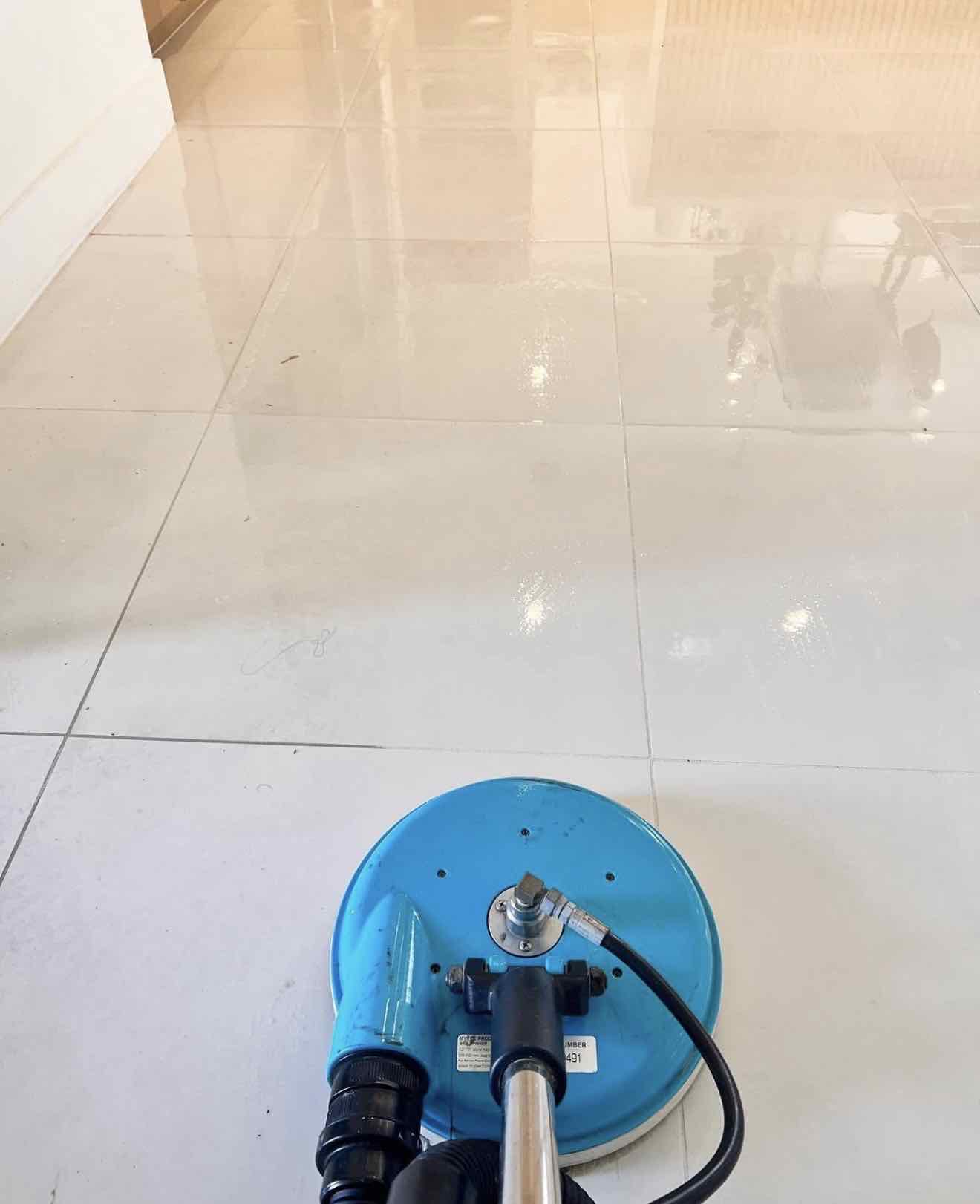
This is a different job from cleaning a dirty floor. It calls for the right solution to break the mineral film loose and extraction to pull it off the surface, which is why grout-haze removal is its own specialized pass. More scrubbing with a mop only spreads the film further.
Textured tile holds onto it
If you went with a textured, matte, or stone-look tile, the haze tends to read heavier, and there is a reason for that.
Smooth porcelain has almost nowhere for the residue to sit, so it releases the film fairly easily. Textured tile is covered in tiny grooves and pits, and the haze settles down into all of them. A mop glides right over the top and never reaches into the texture, so the film stays put. Clearing haze off textured tile takes the right solution worked into the surface and lifted back out, which a household mop simply cannot do.
The bigger picture after a renovation
Grout haze is usually the most visible leftover from a tile job, but it is rarely the only one. Any construction or renovation throws off a huge amount of fine dust, and that dust settles into grout lines, ledges, and every flat surface long after the crew packs up.
It settles everywhere. Into the fresh grout lines, across the tile, along baseboards and trim, on every surface of a space that is supposed to be brand new. You can wipe the obvious spots and still feel grit underfoot for weeks. A post-construction clean deals with the whole picture, the haze and the settled dust together, so a space that is technically done finally feels done. It is the same idea behind cleaning tile before you move in, which we get into in our piece on whether dirty grout can be restored.
Treat it sooner rather than later
Here is the honest part. Grout haze is easiest to remove when it is fresh.
Fresh haze generally comes off with far less effort, though the details depend on the grout that was used, since cement, ready-mix, and epoxy grouts each cure and bond differently. Leave haze for weeks or months and it hardens and bonds tighter to the tile, and the removal takes longer. It still comes off in most cases, but you make the job easier on yourself by handling it early. If your floor went in recently and it is looking cloudy, that is the moment to deal with it.
Get your new floor looking right
You paid for tile, so you should get to see the tile. If your brand-new floor looks dull or cloudy, or a renovation left dust in every corner, reach out for a free quote. We will tell you honestly whether it is grout haze or something else, and clear a sample area on arrival so you can see the real surface before we do the whole floor.
Frequently asked questions
What is grout haze?
Grout haze is a thin, cloudy film of grout residue that dries on the surface of your tile during installation. It is a normal part of tiling, and you usually do not see it until the floor dries and the light hits it a certain way.
Why does mopping not remove grout haze?
The haze is a mineral residue bonded to the tile surface, so a wet mop just softens it and smears it around instead of lifting it off. Clearing it takes a specialized pass with the right solution and extraction, which is different from a regular tile cleaning.
Is grout haze worse on textured tile?
Yes. Smooth porcelain releases haze fairly easily, but textured and matte tile has tiny surface grooves that hold the residue, so the film reads heavier and takes more work to clear.
Should I get a post-construction cleaning after a renovation?
If you can, yes. Fine construction dust settles into grout lines and across every surface of a new space, and a post-construction clean is what makes a finished project actually feel finished.
Does grout haze get harder to remove over time?
It does. The sooner haze is treated the easier it comes off. Left for weeks or months it hardens and bonds tighter, so the removal takes longer.