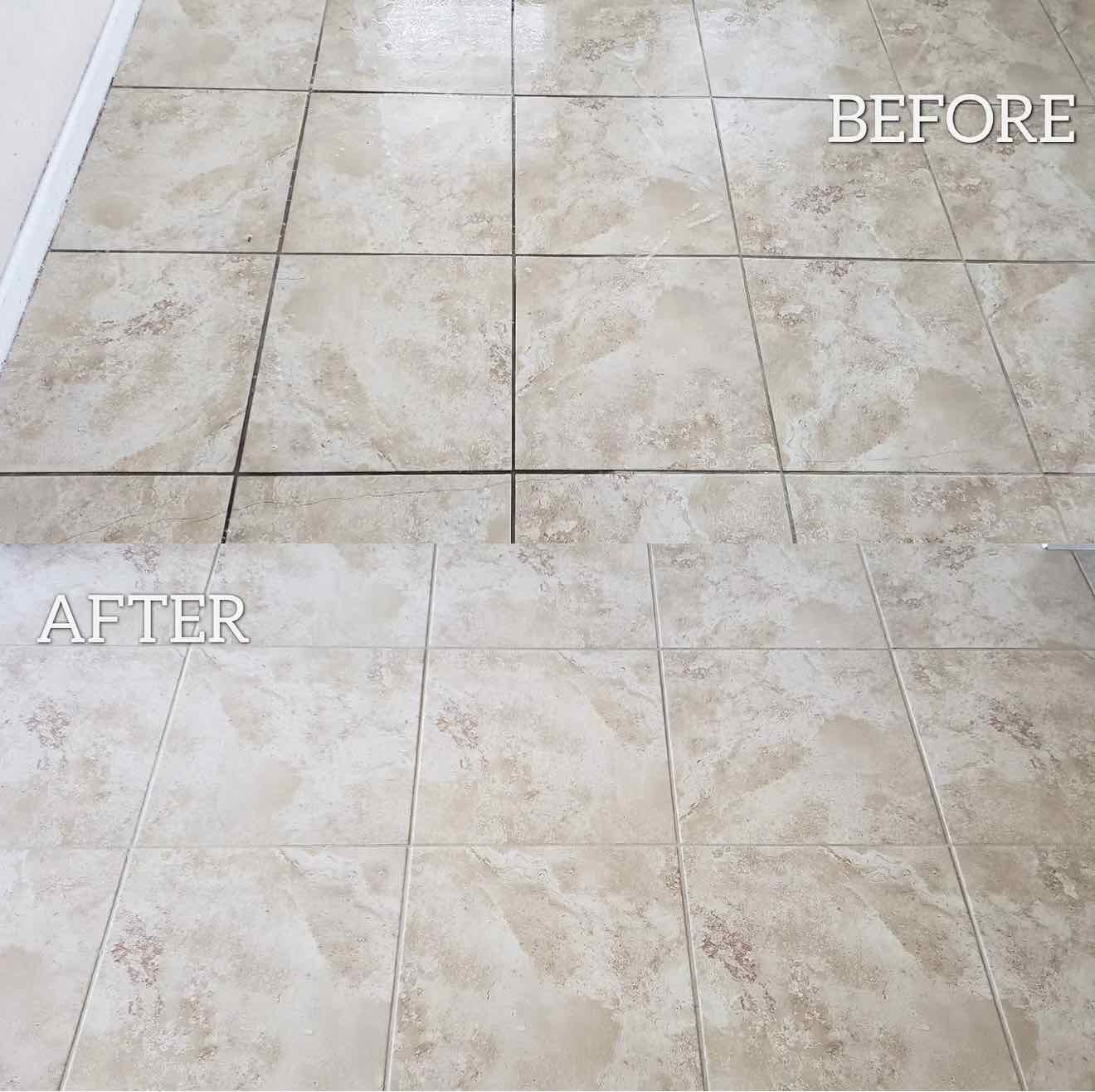
There is a moment we see on almost every tile job. We clean a strip of grout, the homeowner leans in, and they realize the color they thought their grout was is nowhere close to the color it actually is.
Most people assume dark grout means worn-out grout. Nine times out of ten it means dirty grout, and dirty grout can come back.
Your grout is probably fine underneath
Grout is porous, a sponge full of tiny channels that have been quietly collecting dirt, grease, and moisture since the day the floor went in. We covered why mopping keeps losing that fight in our guide on whether professional cleaning is worth it; the short version is that surface cleaning never reaches what lives in the pores.
That buildup is what turned your grout gray or brown. The material itself, the actual sand and cement holding your floor together, is usually still sound underneath. Which means the fix is removal, and removal is a cleaning problem rather than a construction problem.
What restoration actually looks like
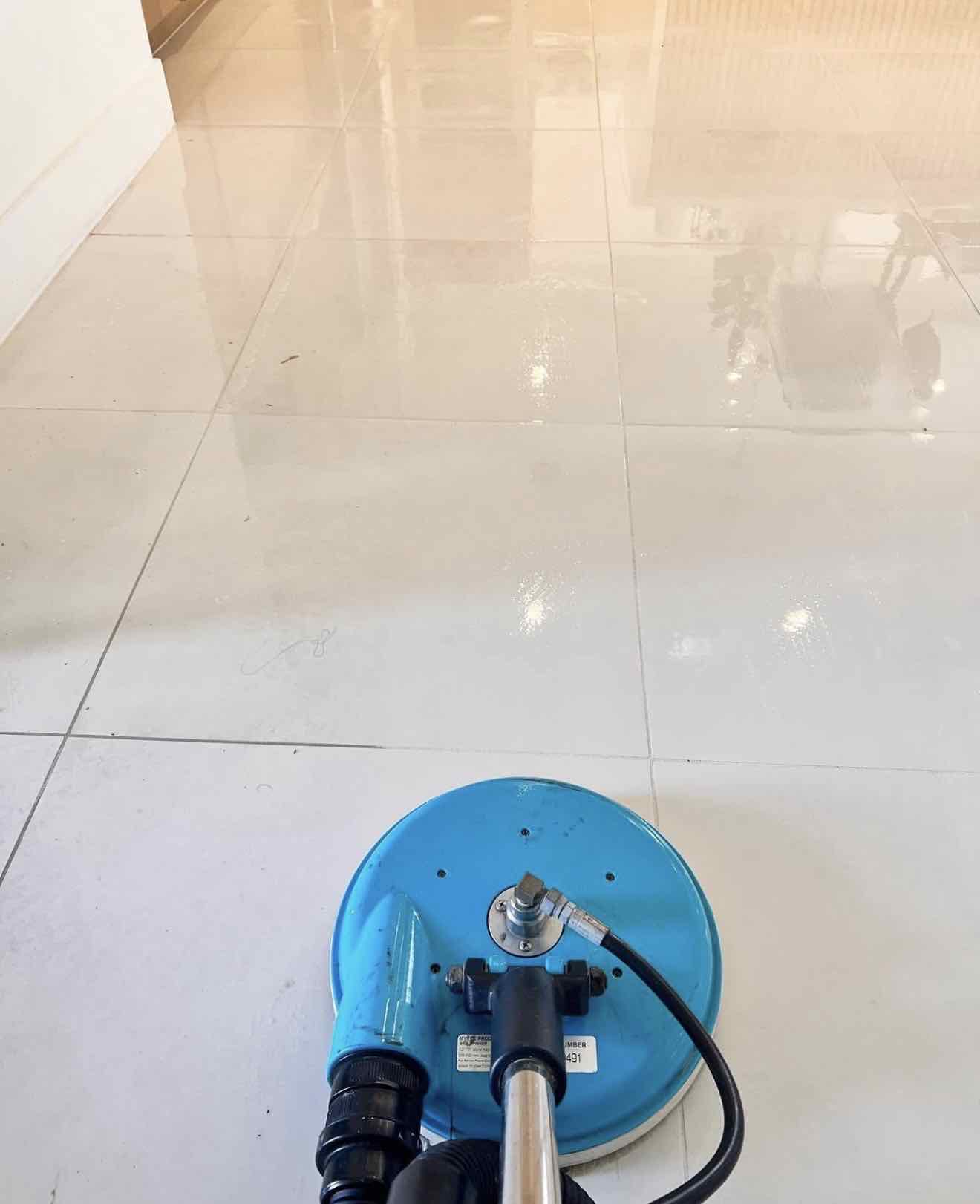
A restoration clean runs on three things: heat, pressure, and extraction. We run a Sapphire Scientific 370SS truckmount that pushes steam into the grout lines at high temperature, breaks the buildup loose, and immediately vacuums it off the floor. The dirt leaves the house through a hose instead of getting pushed around by a mop.
The part homeowners care about: this is how the original color comes back. Once the years of buildup are out of the pores, whatever color your grout was on installation day is what you see again.
And here is our honest asterisk. In many cases the color comes back fully. In some, a stain has soaked so deep into unsealed grout that no amount of extraction reaches all of it. We would rather show you than promise you, so we start every tile job with a sample area on arrival. You see exactly what your floor will look like before we run the full job.
Seal it while it is clean
If you stop at the cleaning, you restart the same clock. The pores are open again, and daily life starts refilling them on day one.
Sealing is the step that changes the timeline. A grout sealer fills those pores with a protective barrier, so dirt and spills sit on top where your regular mop can reach them. Freshly cleaned grout, once it has fully dried, is when sealer bonds best, which is why we recommend pairing the two whenever your floor is a good candidate. Some grout types get little from a sealer, and we will tell you which yours is. Sealing over dirty grout only preserves the dirt.
Sealed grout stays presentable for years with normal mopping. Unsealed grout in a busy Florida kitchen can start darkening again within months.
Restore or replace? Do the math
We meet a lot of homeowners in Pembroke Pines, Weston, and Davie who are pricing out full tile replacement because their floor "looks old." Replacement means demolition, dust, days of work, and thousands of dollars.
If the tile is intact and the grout is structurally sound, a restoration clean and seal gets you a floor that looks close to new for a small fraction of that, finished in hours instead of days. Replacement makes sense when tile is cracked or the grout is genuinely crumbling. For everything else, restore first and spend the difference on something you will enjoy more than new tile.
The moments it pays for itself
A few situations where a grout restoration earns its cost fastest:
- Before listing or renting. A buyer walking through reads dark grout lines as neglect, fairly or unfairly. A tile-heavy South Florida home shows dramatically better with bright grout, at a cost that rounds to nothing next to what staging spends.
- Before you unpack. A "clean-looking" home can hold years of the previous owner's dirt in the grout. Cleaning before the furniture arrives is easier and cheaper, and you move into a floor that is clean from day one.
- After a renovation. Fresh tile work often carries grout haze, a cloudy film left by installation. It needs a specialized removal pass, and until then your brand-new floor will look oddly dull.
See your grout's real color again
If you are staring at dark grout lines wondering whether they are dirty or done, the answer is one sample area away. Reach out for a free quote, and if there is any doubt about how much color will come back, we will clean a test spot and let the floor speak for itself.
Frequently asked questions
Can dirty grout be restored to its original color?
In many cases, yes. Dark grout is usually years of embedded dirt sitting in the pores, and hot water extraction pulls it out and reveals the original color underneath. Deep-set stains in unsealed grout can be permanent, which is why we start with a sample area on arrival, so you see the real result before we run the full job.
What is grout sealing, and why is it important?
Grout sealing applies a protective sealant that fills the pores in the grout, so dirt and moisture sit on the surface instead of soaking in. It keeps freshly cleaned grout looking clean far longer and makes your regular mopping much more effective.
Should grout be sealed after cleaning?
When your grout is a good candidate for it, right after a deep clean is the best time. The pores are open and free of dirt, and once the grout has dried the sealer bonds properly. Sealing dirty grout just locks the stains in.
Is tile and grout cleaning a good investment before selling or renting a property?
It is one of the cheapest ways to make a tile-heavy Florida home show better. Buyers and tenants read dirty grout as neglect, and a deep clean costs a small fraction of what replacing the flooring would.
Should I have tile and grout cleaned before moving into a new home?
We recommend it. Grout holds dirt, bacteria, and residue left by the previous occupants, and cleaning is far easier before the furniture and boxes arrive.