Customers usually ask this before they ask about price. Should the drapes go out to a dry cleaner, or can they be cleaned right where they hang? Both answers are legitimate. Which one is right for your windows depends more on the fabric than on anything either business puts in an ad.
So here is the fair version, including the part where we send people somewhere else.
When the dry cleaner is the right call
Some fabrics should stay away from moisture, and pretending otherwise would be a good way to ruin somebody's window treatments. Delicate materials, and any panel whose care label rules out wet cleaning, belong with a dry cleaner who handles them in solvent instead.
That is a real category, and it is why we test before we clean rather than after. When a hidden-spot test or the label tells us a fabric should not take steam, we say so on the spot and stop there. Nobody wants the phone call that starts with a shrunken panel.
If your drapes fall in that group, a dry cleaner is doing the job we cannot, and we would rather you hear that from us before we are standing on a ladder.
What the dry cleaner route costs beyond the ticket
For everything else, the comparison gets more interesting, because the price on the dry cleaner's counter is only part of what you spend.
- Takedown. Somebody has to unhook every panel, pull the hardware, and keep track of which piece came from which window.
- Transport. Bulky fabric goes into a car, over to the shop, and back again. That is two trips you are making.
- Bare windows. Your home sits with the windows uncovered until the panels come home. In a front-facing living room, that is the part people notice most.
- Re-hanging. Everything goes back up, gets straightened, and gets re-pleated so it hangs the way it did before.
- Per-panel handling. Every one of those steps repeats for every panel, so a house with a lot of windows multiplies quickly.
None of that shows up on the receipt, and all of it is real. When people tell us dry cleaning felt expensive, the counter price is usually the smaller half of what they mean.
How the in-place clean works
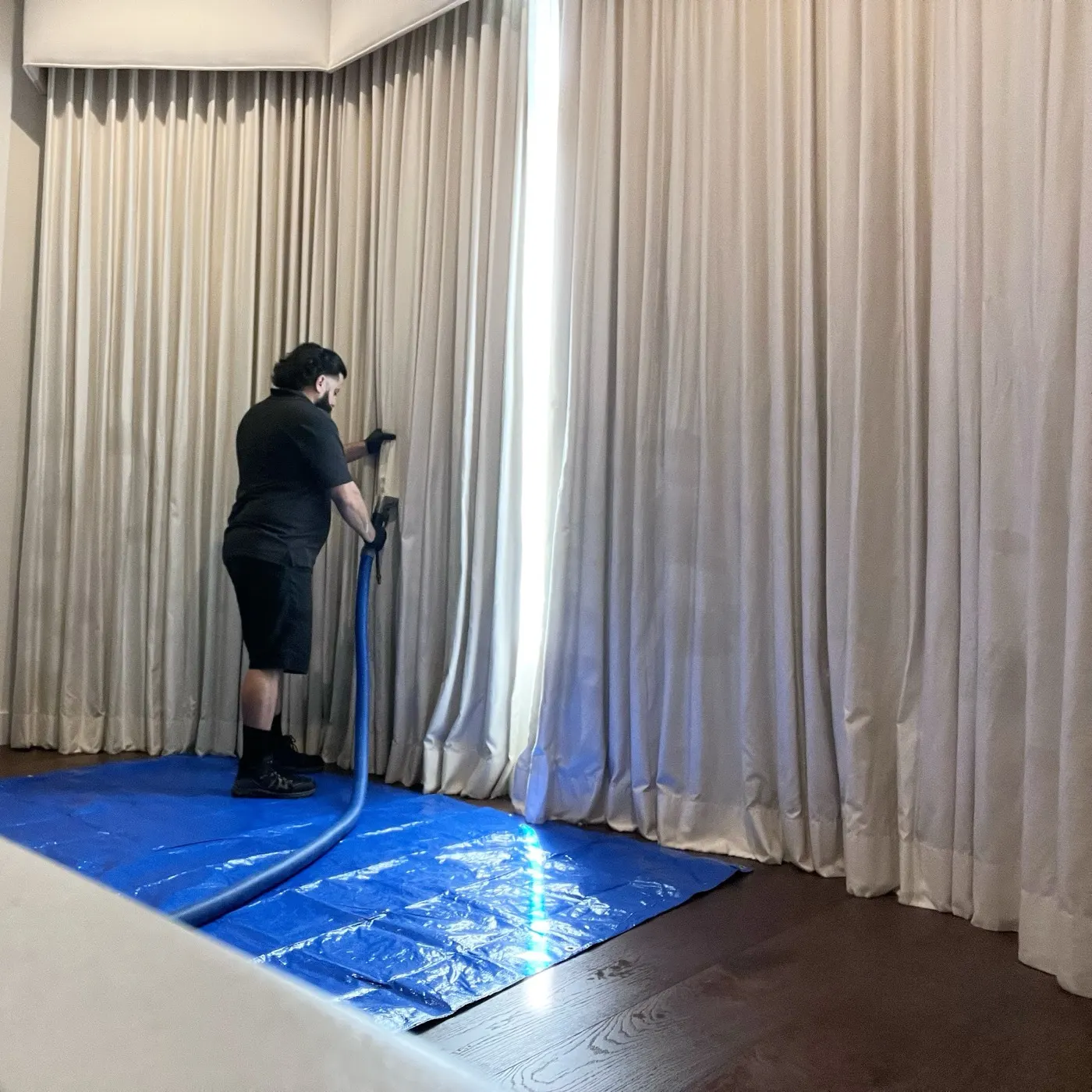
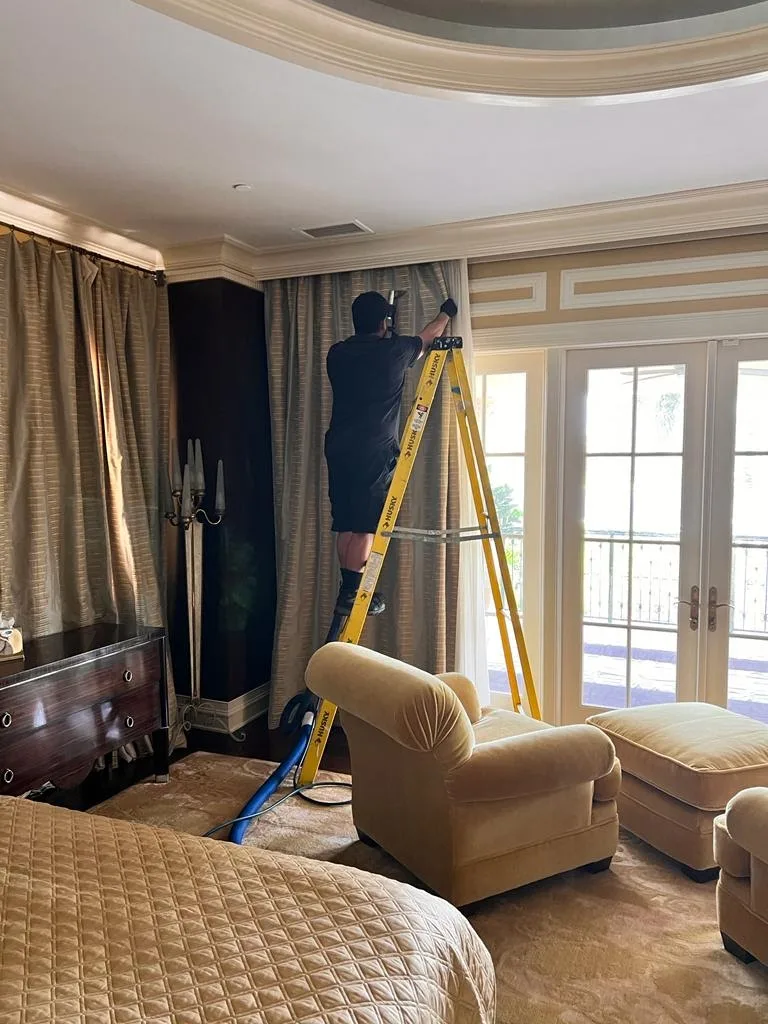
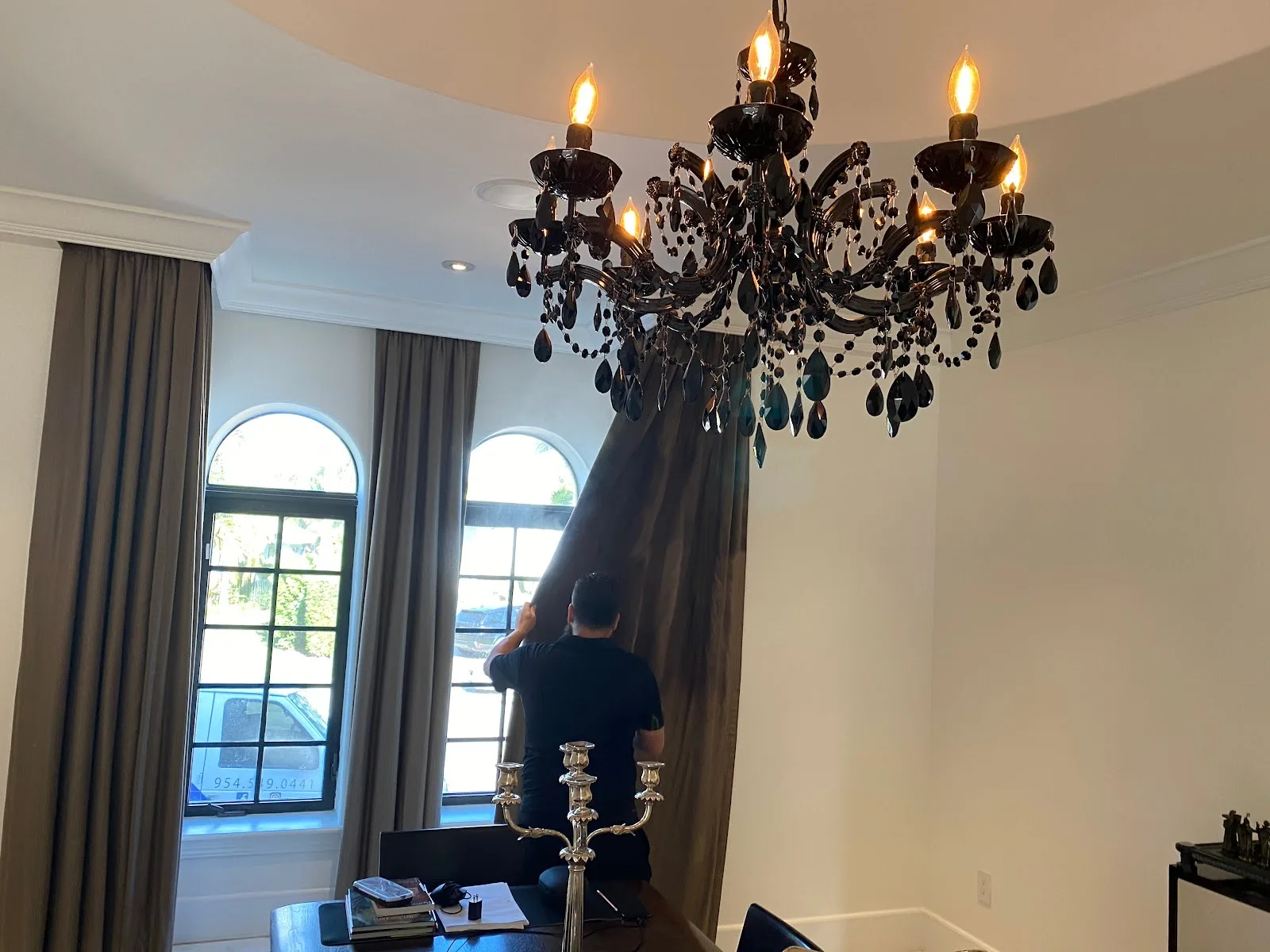
Our version happens on the rod. The panels never come down.
We start dry, vacuuming loose dust off both sides of the fabric, because pulling that layer off first keeps it from turning into mud the moment moisture arrives. Then we steam clean the panels while they hang, working the fabric from top to bottom. Sheers, valances, and the edges get detailed by hand, since those are the spots that show when the light comes through in the afternoon.
The practical result is that one visit finishes it. Your windows stay covered the whole time, nothing gets unhooked or driven anywhere, and you skip the re-hanging afternoon entirely. That is the honest reason most of our drapery cleaning customers stay with the in-place method once they have tried it.
The test that decides which way you go
Before any moisture touches your drapes, we do two things. We read the care label, and we run a hidden-spot test somewhere the eye never lands.
That test tells us how the fiber and the lining respond, and we match the method to what we find. Lined panels behave differently from unlined ones, and a lining that reacts badly is worth knowing about before the whole panel is wet. If the answer comes back wrong, we stop and tell you to take that piece to a dry cleaner.
We would rather lose the job than hand back a damaged panel. That is the whole policy.
What cleaning will not do for you
Two limits worth naming plainly, because they come up often in South Florida homes.
Sun fading is permanent. Our light is brutal on fabric, and a panel that has been baking in a west-facing window for years has lost color out of the fiber itself. Cleaning lifts the dirt and dust sitting in that fiber. The faded color stays faded, and a clean panel sometimes reads as slightly lighter simply because the grime that was darkening it is gone.
Stretching works the same way. Fabric that has hung long enough to lengthen has changed shape, and cleaning does not pull it back. Repairs, hems, and alterations are a seamstress job, and we will point you toward one rather than guess.
Choosing between them
The short guide, without the sales pitch:
- Care label restricts wet cleaning. Go to a dry cleaner. That is what the label is for.
- The fabric fails our hidden-spot test. Same answer, and we will tell you the moment we know.
- Everyday lined or unlined drapery. In-place steam cleaning handles it, and you keep your windows covered.
- A lot of panels. The in-place method pulls further ahead here, because per-panel takedown is what makes a big house expensive.
- Offices, restaurants, and other commercial spaces. Cleaning on the rod means the room stays presentable while we work, which matters when customers are walking through it.
Get a free quote
We clean drapery in place for homes and businesses across Broward, Miami-Dade, and Palm Beach. Pricing depends on the fabric, the number of panels, and how they hang, so we quote it after we see the job instead of guessing over the phone.
Reach out for a free estimate and tell us what you are working with. If a hidden-spot test says your fabric belongs at a dry cleaner, we will tell you that too, and you can spend the money where it does the most good.
Frequently asked questions
Can drapes be steam cleaned while they are still hanging?
Yes. That is how we do it. The panels stay on the rod and we clean them in place, so nobody is unhooking hardware or hauling fabric out to a van. The whole job happens in one visit.
Is dry cleaning better for curtains than steam cleaning?
For some fabrics it is the safer choice, and we will tell you when yours is one of them. Delicate materials and panels whose care label restricts wet cleaning belong with a dry cleaner. For most everyday drapery, in-place steam cleaning gets the same fabric clean without the takedown and the wait.
How do I know whether my drapes can handle steam?
The care label answers part of it and a hidden-spot test answers the rest. We test somewhere out of sight before anything else happens, and we match the method to the fiber and the lining. If the fabric should not take steam, we say so before we touch it.
Do I have to take my curtains down to get them cleaned?
For in-place steam cleaning, you do not. Taking panels down is what makes the dry cleaner route slow, because someone has to unhook them, drive them over, wait, pick them up, and hang them back the way they were.
Will cleaning fix drapes that are faded or stretched?
No, and we would rather say that upfront. Sun damage and stretching are structural changes in the fabric. Cleaning removes the soil sitting in the fibers. A faded panel comes out clean and still faded, and repairs and alterations sit outside what we do.