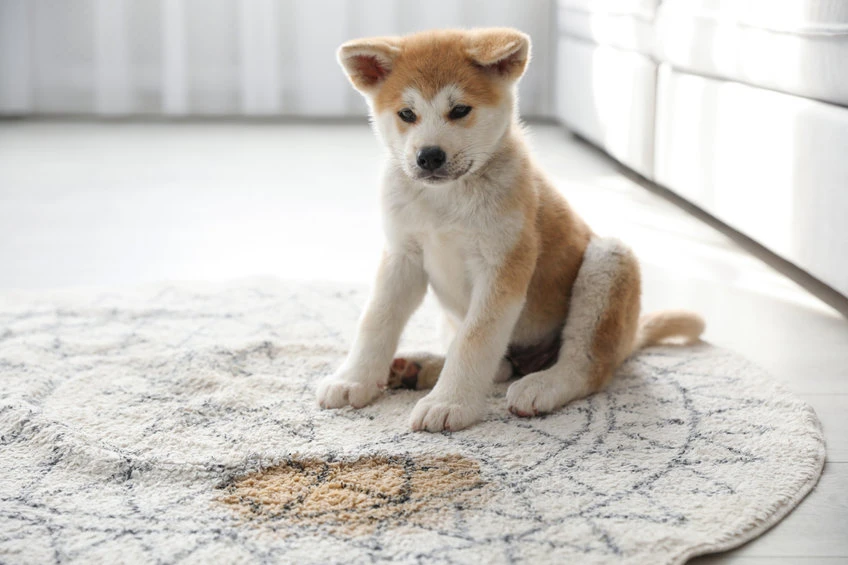
You cleaned the spot. Scrubbed it, hit it with the bottle from the store, maybe rented a machine on the way home. The stain lifted, the room smelled fine, and you moved on. Then a few days later a warm humid afternoon rolls in and the smell is right back where it started.
If that keeps happening to you, you are not doing anything wrong. The cleaning simply reached the part you could see and stopped there.
Why the smell comes back after you clean
When a pet has an accident, the liquid does not sit politely on the surface. It soaks down through the fibers into the backing, into the padding underneath the carpet, or into the internal layers of a cushion or mattress. You blot and treat the top, the spot looks handled, and the part that soaked down stays exactly where it landed.
A store spray and a rented grocery-store machine both work that top layer. They pull up what your eyes can see and leave the source an inch below, still holding odor and still feeding the bacteria that grew around it. So the room passes the smell test for a few days, and then it does not.
Humidity is what reactivates it
As urine dries it leaves behind a residue that clings to moisture. South Florida gives it plenty. On a muggy afternoon the damp air works its way back into the padding and the backing and rewets that residue, and the odor lifts off again like the accident was fresh.
This is the cycle so many pet owners in Pembroke Pines and Miramar get stuck in. Clean, quiet for a week, humid day, smell returns, clean again. The surface keeps getting treated while the source never leaves.
Every surface holds it a little differently
The reason a single spray never fixes every accident is that each surface traps urine in a different place:
- Carpet. The accident travels past the pile into the backing and the pad beneath it. That pad acts like a sponge, and it is the layer a spot clean almost never reaches.
- Area rugs. Many rugs hold urine deep in a dense foundation, and a wool or natural-fiber rug can be sensitive to the wrong product. These often clean best off-site where we can flush the whole rug through.
- Upholstery. Cushions pull the liquid into their foam core, and white or light fabric can react to both the accident and the treatment differently than colored fabric.
- Mattresses. Urine wicks well below the surface into the internal layers, where retained moisture and odor settle in and standard cleaning barely touches them.
Pulling it out instead of covering it up
Fixing a returning odor takes two things a store product cannot offer. The first is hot water extraction, what most people call steam cleaning, which flushes the contamination out of those deeper layers and vacuums the moisture back so nothing is left behind to feed the smell. The second is an enzyme treatment that breaks down the residue extraction cannot lift on its own, digesting the source rather than perfuming over it.
We walk through that full process in our guide on removing pet stains and odor for good. The short version is that the treatment has to reach where the accident settled, and a surface pass never does.
Where cleaning reaches its limit
Here is our honest asterisk. In many cases the odor comes out completely and the surface stays. An old spot that soaked the same patch for months is a harder story. Sometimes the smell resolves fully while a shadow of permanent staining remains, and sometimes a pad that has been saturated over and over has to be replaced rather than cleaned.
We would rather tell you that on arrival than promise a result we cannot deliver. We look at the actual spot, and you get a straight read on how much will come back before any work starts.
So, does steam cleaning remove pet odor?
Yes, with one condition: the steam has to be doing extraction, and it needs the enzyme working with it. Truck-mounted hot water extraction flushes the source out of the padding, backing, or cushion core, and the enzyme treatment digests what extraction cannot lift. That pairing removes the odor at the source instead of masking it.
What does not work is steam alone on the surface. A handheld steamer or a light pass reheats and rewets the residue without removing it, which can make the room smell worse for a day. If a machine cannot pull the moisture and contamination back out, the odor comes back with the next humid day.
Put the smell behind you
If a pet spot keeps haunting a room every time the humidity climbs, reach out for a free quote. We will take a look, tell you honestly what cleaning will do on your surface, and give you a plan to stop the cycle for good.
Frequently asked questions
Why does my pet's urine smell come back days after I clean it?
Because most cleaning only reaches the top layer. Urine soaks down into the backing, the padding, or the internal layers, and a store spray or rented machine leaves that part behind. When the humidity climbs, the residue underneath gets damp and releases the smell again.
Why is the odor worse on humid days?
Dried urine residue holds onto moisture. On a muggy South Florida afternoon the air rewets what soaked into the padding or backing, and the odor reactivates. That is why a spot can seem fine for days and then smell strong the first humid day.
Can store-bought cleaners actually remove pet odor?
They handle the surface stain, which is why the spot looks clean. What they usually cannot do is reach an inch down where the accident settled, so the source stays put and the smell returns.
Do carpet, rugs, upholstery, and mattresses need different treatment?
Yes. Each one traps urine in a different place, from carpet padding to a rug's foundation to the internal layers of a mattress. We adjust the approach to where the contamination actually sits on that surface.
Will the stain come out along with the smell?
Usually the odor is the easier of the two to fully resolve. An old spot that soaked the same spot for months can leave permanent staining even after the smell is gone, and we will tell you honestly what to expect before we start.
Does steam cleaning remove pet odors?
Yes, when it is paired with an enzyme treatment and real extraction. Hot water extraction flushes the contamination out of the padding or backing, and the enzyme breaks down the residue that feeds the smell. A steam pass over the surface alone will not do it, because the source sits deeper than the steam reaches.